
Ubud and Tabanan
Tegallalang & Jatiluwih
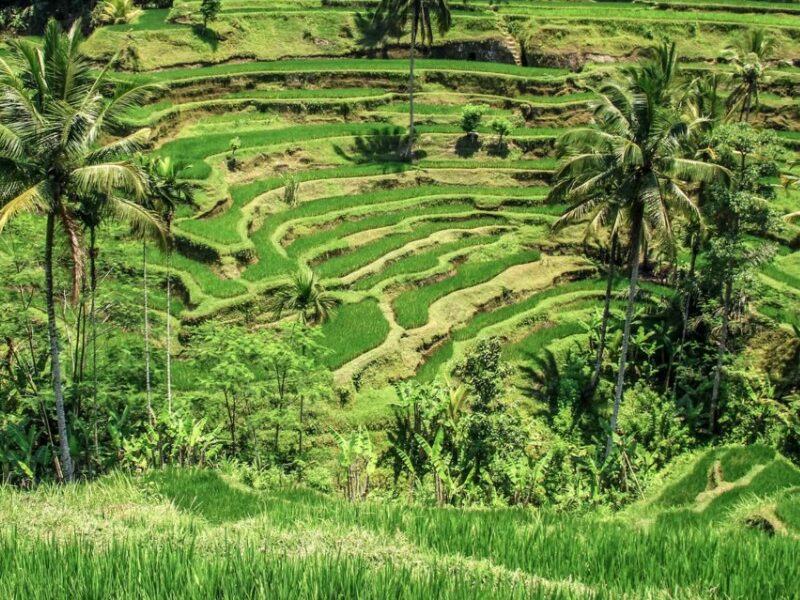
Bali’s rice terraces are a living landscape shaped by more than a thousand years of farming.
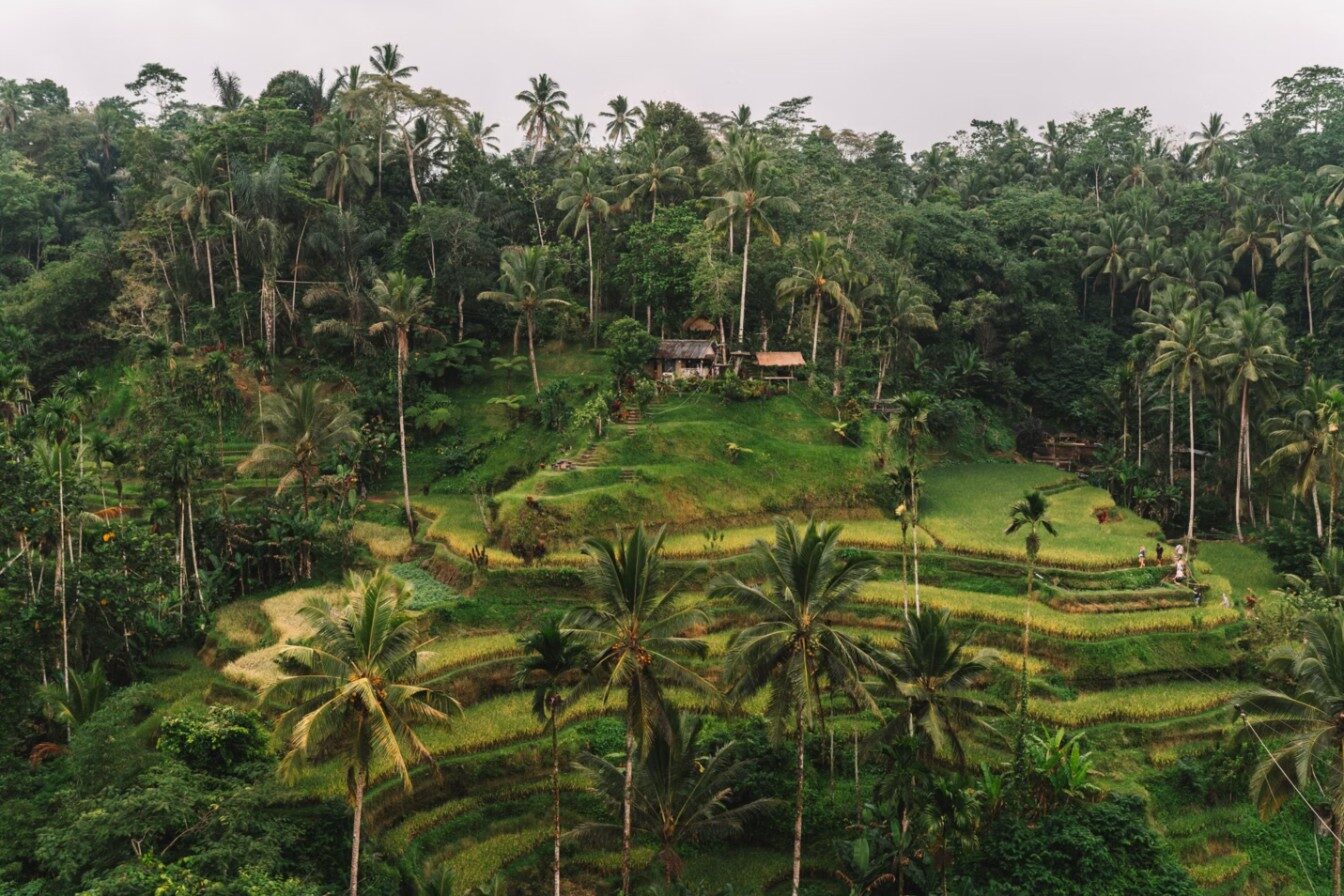
Bali’s rice terraces are a living landscape shaped by more than a thousand years of farming. Tegallalang, north of Ubud, is the famous postcard view; Jatiluwih in Tabanan is larger, quieter and part of a UNESCO World Heritage site.
History
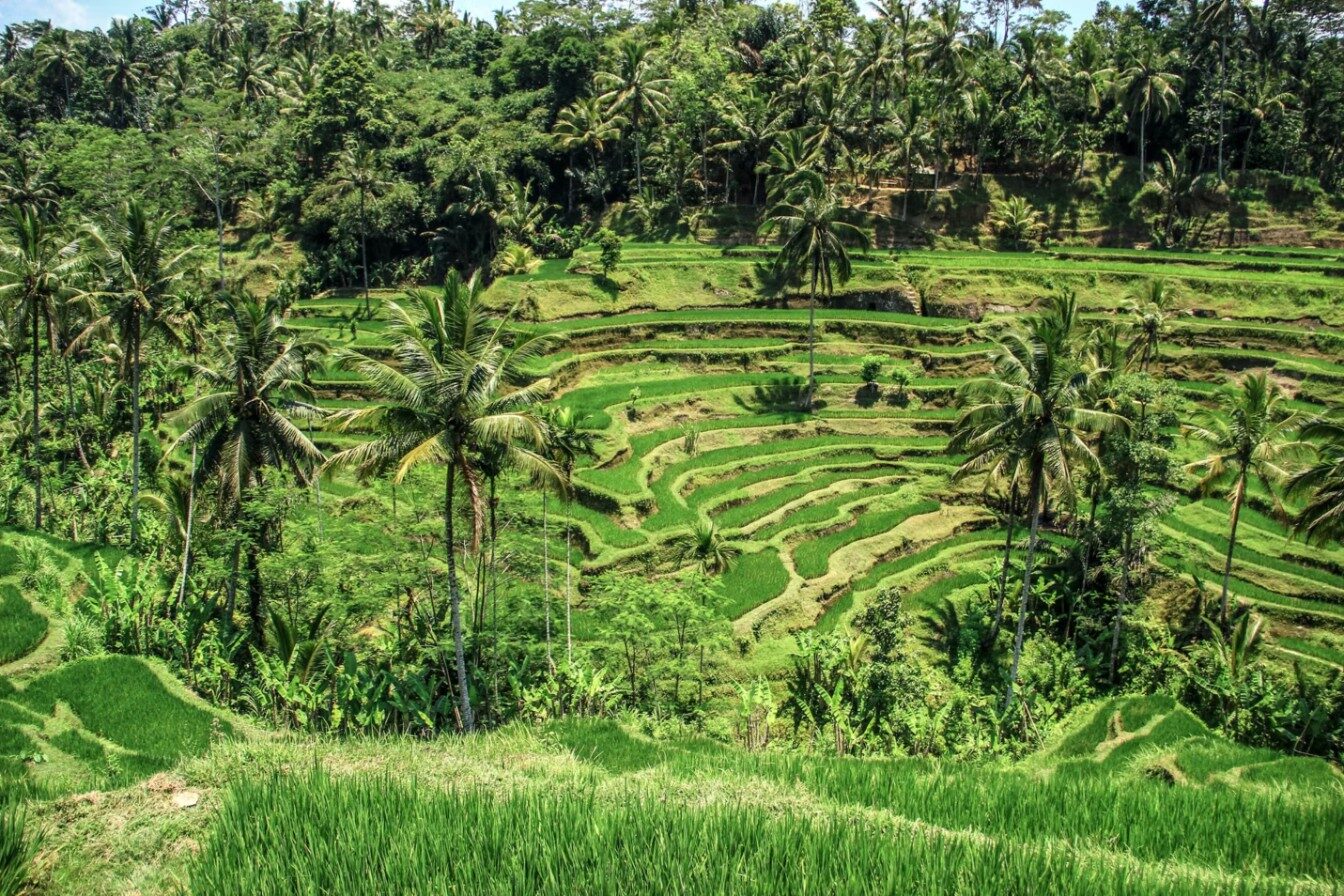
Balinese rice farming is organised by the subak, a cooperative water system that developed around the 9th century. Canals, tunnels and weirs carry water from forests and lakes down to terraces cut into the hillsides, and each subak shares the water fairly between upstream and downstream farms.
In 2012 UNESCO inscribed the “Cultural Landscape of Bali Province: the Subak System as a Manifestation of the Tri Hita Karana Philosophy” as a World Heritage site. Jatiluwih, on the slopes of Mount Batukaru, is part of it, with about 600 hectares of terraces.
Meaning and culture
The subak follows Tri Hita Karana, the Balinese philosophy of harmony between people, nature and the divine. Rice is seen as a gift from the gods, and every subak has its own water temple where farmers make offerings to Dewi Sri, the rice goddess, at each stage of the crop.
Planting is coordinated across whole valleys so that fields rest at the same time, which keeps pests down and water use in balance. Look out for small shrines and offerings at the corners of the fields.
What to see
- The classic Tegallalang valley view and its walking paths
- Jungle swings and cafes along the Tegallalang ridge
- The marked red, blue and white walking trails at Jatiluwih
- Farmers planting or harvesting, depending on the season
Good to know
- Bring small cash: several landowners collect donations along the Tegallalang paths.
- Swings and photo spots are paid extras.
- Wear shoes with grip; the paths can be muddy after rain.
- Stay on the paths and respect the fields: they are working farms.
Quick facts
- Tegallalang About IDR 25K to 50K in local donations, open roughly 06:00 to 18:00
- Jatiluwih IDR 100K adult, 50K child
- Time needed 1 to 2 hours at each
- Best time Early morning; greenest from January to April
- Distance Tegallalang 20 minutes from Ubud; Jatiluwih about 2 hours from south Bali
Location
Open in Google MapsFees checked October 2026 and may change.
More destinations
Keep exploring
Ready to explore Bali?
Tell us your dates and where you are staying. We will plan the day around you.